Statistics

May is foster care awareness month.

My goal this month is to post in some medium on a daily basis to create greater awareness of needs, dispel some myths and encourage those impacted by foster care.

I’d be so delighted if you are able to join me this month. Additionally, if anything I say sparks curiosity, resonates with you or inspires you, please take the time to share that in some way with someone in your life.

It takes a community to care, to create lasting change and to build support around the vulnerable. It all begins with a conversation.

May 2: The Statistics

“Without knowledge, action is useless; and knowledge without action is futile.”

-Abu Bakr

According to the Ontario Association of Children’s Aid Societies, in 2024 there were an average of 8200 children and youth in care in Ontario each month. Over half (56%) of those were youths aged *16-22+.

Every region in Ontario is in desperate need of more foster homes in order to be able to place these children in safe, loving environments while the agency works with the caregivers to try to increase safety and well being. Many children are needing to be moved far from their home, family, school and services to be placed in a foster home. This makes the process of supporting and reunifying the family unit much more challenging. It also increases the traumatic impact on the child and the losses they incur during that separation process.

Poidata states that there are 4 841 churches in Ontario. When we compare this to the average 8200 children in care each month, this means that if each church in Ontario cared for just two children in care, there would be more than enough homes for the 1% of children who are removed from their families and in need of a safe place to stay.

So how do these families become connected to a child welfare agency?

Most of these families will get connected throuh referrals from concerned individuals such as teachers, neighbours, family members or friends. Some referrals are made by police or other public service agencies.

Everyone in Ontario, including general citizens and people who work closely with children, are required by law to report suspected child abuse or neglect of a child under the age of 16 to your local child welfare agency. While this may feel like a difficult decision, it’s always best to ere on the side of caution and allow professionals to decide whether or not your concerns are in need of further investigation.

More than 125 000 calls or referrals requesting family assistance were made in Ontario in the 2023-2024 fiscal year.

Out of these, 63 000 (just under half) required a full child protection investigation. The rest of these referrals did not require a full investigation and/or were connected with community resources that would further equip and proactively offer protection.

Photo by Photo By: Kaboompics.com on Pexels.com

When a full investigation was completed,

  • 97% resulted in children and youth remaining at home with their families while agencies work alongside to offer support and buffering care
  • A mere 2% of those investigations resulted in a child needing to be removed from their home and placed within the home of a family member, friend, neighbour, etc.
  • Only 1% of those investigations resulted in a child or youth being removed from their home and placed into foster care

Child Welfare systems are overwhelmed, undersupported, working with minimal resources and surrounded by legal “red tape” that governs their ability to provide services and protection to children and families. Despite that, they are working diligently to provide support to families that will enable them to keep children at home with their parents. This might look like finding funding, respite or educational opportunities for caregivers. It may also include assistance for parents in navigating challenging systems and connecting them with community supports. It might look like offering 1:1 parenting coaching, group parenting classes or connecting parents with services needed.

Child Protection Workers work hard to find creative, supportive and respectful ways to support struggling families.

Contrary to popular opinion, children are not taken from families lightly and child welfare agencies certainly are not interested in removing children without proof of significant danger and only after many attempts have been made to remediate the situation in other ways.

So what can we do about these statistics?

  1. Pray – Offering support to hurting, vulnerable and broken families requires much grace and wisdom. Pray for the families, youth and children represented by these statistics. Pray for the social workers and agencies on the front lines attempting to offer support to these families. Pray for families currently offering care to these children and pray that more families will step into the gap to fill these needs. Pray for churches to get involved – that as Jesus followers we would be willing to bridge the gap between child welfare agencies and Christians who are eager to care. Pray for the hands and feet of Jesus to be evident in Ontario’s foster care system in undeniable ways.

35 For I was hungry and you gave me food, I was thirsty and you gave me drink, I was a stranger and you welcomed me, 36 I was naked and you clothed me, I was sick and you visited me, I was in prison and you came to me.’ 37 Then the righteous will answer him, saying, ‘Lord, when did we see you hungry and feed you, or thirsty and give you drink? 38 And when did we see you a stranger and welcome you, or naked and clothe you? 39 And when did we see you sick or in prison and visit you?’ 40 And the King will answer them, ‘Truly, I say to you, as you did it to one of the least of these my brothers,[a] you did it to me.’”

Matthew 25:35-40

2. Start the Conversation – Whether this is at your dinner table tonight, in your weekly small group, your workplace or with your neighbours…start a conversation that is both factual and compassionate. The way we speak about foster care and the people within this system matters. Talk to your spouse about how you might be able to get involved as a family. Talk to your teens about the reality that many of their peers are living in. Talk to your kids about why a child at school might be having a hard time and how not all families look the same. Talk to the people in your church about how you might be able to offer care to those in your community who are struggling. Talk to foster, adoptive, kinship and customary care families about their experiences and ask how you might be able to offer support to them.

Above all, love each other deeply, because love covers over a multitude of sins.”

-1 Peter 4:8

3. Act – Lastly, however you are prompted by the Spirit – take action. Make a phone call to your local foster care agency or a family you know who is providing foster care. Make a plan for how you are going to support a foster family or how you might be able to help support a struggling family. Continue to educate yourself about how foster care is impacting your community and what efforts are being made to alleviate risk factors.

Thank you for caring!

-AF

*Did you know that child welfare agencies provide supports to youth “aging out” of the system up to the age of 22 and even older? There are myriads of ways you can support these young adults in your community.

Some practical needs include: housing in the form of an extra room to rent out to a youth attempting independence or lacking family support, providing transportation, mentorship opportunities, etc.

Think of all the things you didn’t know at age 18, 20 or 22. College applications, healthcare, employment opportunities…all of these are huge and scary realities that a teen emerging from foster care or a dysfunctional family environment may need support navigating.

Let’s Begin With Loss

May is foster care awareness month.

My goal this month is to post in some medium on a daily basis to create greater awareness of needs, dispel some myths and encourage those impacted by foster care.

I’d be so delighted if you are able to join me this month. Additionally, if anything I say sparks curiosity, resonates with you or inspires you, please take the time to share that in some way with someone in your life.

It takes a community to care, to create lasting change and to build support around the vulnerable. It all begins with a conversation.

Photo by Alexander Krivitskiy on Pexels.com

May 1: Let’s Begin With Loss

Every single child who enters the foster care system has experienced significant loss. By this I mean they have experienced gut-wrenching, world shifting losses that will forever change how they view the world. We call this kind of loss: trauma.

Typically, these losses include:

  • Loss of a parent or other primary caregiver through separation or death
  • Loss of extended family members and friends
  • Loss of familiar environments such as their school, daycare, favourite park, neighbourhood, etc
  • Loss of toys and items – that stuffie he always sleeps with or the markers Grandma gave her for her birthday are likely to have been left behind
  • Loss of safety – children are only ever removed from homes because they are in need of safety and protection in some form
  • Loss of comfort – whatever is normal to us is what we find comfortable. While a blanket reeking of marijuana may not provide comfort to you, for a small child who associates this smell with “home”, replacing that blanket or washing it with bleach to remove the scent you find disgusting will be a loss.
  • Loss of control – children almost always enter foster care against their will.

These kinds of losses accumulate in staggering realities when a child is removed from their home and family and placed into foster care. This choice is never made lightly. It’s important to remember why this move is deemed a last resort intervention for families who are struggling and the impacts this intervention will have on the family unit.

In the face of such significant losses, most children and their parents will experience feelings of grief, anger, hopelessness and shame.

But this is not what most people first think of when they see a child in the care of a foster family.

“Adoption (or foster care) loss is the only trauma in the world where the victims are expected by the whole of society to be grateful.”

-The Reverend Keith C. Griffith

This quote popped up on my social media feed recently and snagged my attention long enough for me to wince. I feel this. As a foster mom who has loved the children that enter my home deeply, advocated intentionally for their needs, been proactive about connecting with biological parents in healthy ways and supporting reunification…I still fall into the trap of believing that these children and families I care for should be grateful to me; that they owe me something.

This theory is reinforced through comments, conversations and stories that celebrate foster parents as heroic, “saint-like” humans with special giftings to care and serve well. Simultaneously, biological families are generally viewed with thinly veiled disdain and suspicion.

I cannot count the times I have shared that I am a foster parent and been told,

“Good for you!”

“You are amazing!”

“I could never do that.”

“They are so lucky to have you.”

I’m a human, and sometimes these comments feel really good! However, that feeling of satisfaction or even pride is always followed by a sense of sadness, discouragement and a feeling of being misunderstood. While I do understand these comments are made with the best of intentions, they all play skillfully into this false perception that foster parents are uniquely equipped humans who have chosen to sacrifice greatly for the good of others – others being children and families in need of our rescue.

So what’s the problem?

The problem is that when people are hurting, they don’t need someone to rescue them. They need someone to care. And almost anyone can care!

Until we can see foster care as a way to care instead of a way to rescue, we’re going to keep getting it wrong and having unrealistic expectations.

The mother with addiction issues needs someone to care enough to ask the question, “What is it in life that feels so big that you’re reaching for these negative coping tools right now?”

The father with domestic violence charges needs someone to care. Someone to say, “I get it. I never knew I could feel rage toward someone I loved until I became a parent. I know you love your kids. Let’s figure out how to break the patterns of anger and violence so your kids can feel safe with you.”

The toddler who has just been placed into a stranger’s home, far from everything familiar in life, needs someone to care. He needs someone to be patient as he screams through bathtime, bedtime and storytime.

The grandmother who is “abandoning” her grandchildren needs someone to care. She needs someone to come alongside and say, “How can I help? This is a lot that you’re carrying, and I can see how exhausted you are. Your needs matter too. “

The adolescent who has just entered foster care against her will needs someone to care; someone to give her choices about as many things as possible as she navigates this new life that she did not choose or want or ask for. She needs someone to be curious about the coping tools she’s accumulated to survive in a challenging home environment. She needs someone who is willing to show up again and again and again and again.

And all these people need someone who is willing to care without expecting gratitude in return.

I have never met a parent who does not genuinely love their child and want to do better, no matter what they have done. I have also never met a parent who gets it all right 100% of the time.

Almost all of the parents of children entering the foster care system are people who have experienced trauma. They are coping with life in the only ways they know how…just like you and I. Many of them grew up in foster care themselves or in abusive or neglectful home environments where they did not get a chance to learn how to care for children or themselves as caregivers with a healthy balance of structure and nurture.

Many of them are isolated, struggling with mental illness, have toxic relationships and lack financial security.

What would it look like to change our understanding of foster care to include more empathy surrounding the losses involved?

My hypothesis is this:

Understanding the losses that children experience when they enter the foster care system would lead to communities who are:

  • more empathetic toward children in foster care and their biological families
  • more proactive about suppporting struggling families
  • curious about behaviors of both children and adults within the system who have experienced loss
  • dedicated to preventing the separation of families and supporting the reunification of families whenever possible

One more thought to leave you with.

What is something in your life that you do not like and cannot change?

What emotions, behaviors and coping tools come to the surface as you process that reality?

What might it look like to support someone involved with the foster care system today with empathy, curiosity and care?

-AF

Home Educating Your Child During COVID-19

And suddenly thousands of mothers who have never, ever wanted to homeschool are teaching their children at home.

How is it going, sweet Mama?

I know this is not how you anticipated spending this school year. I hope you know you are being thrust into very unusual circumstances and that this is not what homeschooling mamas feel like all the time. As we all know, routine and expectations are a huge part of what makes our days successful, and you had zero time to prepare your home, your heart, your budget or your schedule for this radical change! I hope you are giving yourself boatloads of grace…and your children too!

I wanted to tell you a bit about how we are navigating this season here and hopefully give you some encouragement that will help both you and your children not just survive but thrive in this season of learning at home. If any of these points are encouraging and helpful, take them to heart. If any of these make you feel like hiding under the covers, ignore them! Take only the good stuff here, sisters!

  1. YOUR CHILDREN WILL CONTINUE TO LEARN WHETHER YOU ARE INTENTIONALLY DOING ACADEMICS OR NOT! Take a deep breath and relax! Your children don’t need worksheets, organized activities or 30 min using math apps every single day to keep their brains growing and learning. They are learning! As they draw pictures, build Lego structures, help unload the dishwasher, measure the flour and empty the trash. This is especially true for kids under eight as the research shows that most of their learning happens through play, exploration and hands on experiences. So don’t stress! Look for the learning that is already happening in your child’s day and chalk that up for today’s schoolwork. Write it down if you need help remembering not to have unrealistic expectations. Notice how he’s observing the different water temperatures as he washes his hands at the sink…and makes a horrendous mess in the process! See how her hands are moving carefully and slowly as she draws that butterfly. See how he is learning empathy as he helps his little brother. Don’t miss the way he’s problem solving as he builds that sand castle or how she’s learning time as she watches the clock waiting for snack time to finally come…again! God created those little brains with a curiosity that is insatiable! They are learning every moment of the day. It’s not all in your court. Do what you can and release the rest. Breathe.

2. LET THEM TURN THE SCREEN ON. I’m just going to admit it and own it. We’ve used more screen time in the last 6 months than we ever have before. Right now, my two little boys are downstairs watching Paw Patrol because I just can’t pull it together. I can’t put on my happy face and come up with cheerful answers right now. I can’t solve another squabble. I can’t handle the noise level of two happy, loud, active boys this afternoon or risk having the baby woken from her nap. I just need a break and a few minutes of silence. They might be there the rest of the afternoon. We have definitely surpassed the ‘hour a day’ screen recommendations many times lately. But you know what? Right alongside that increased screen time we’ve also had more time outside than normal. Without the obligations of school my children have had time to play in the sandbox, jump on the trampoline, swim at the beach, ride bikes, climb trees, play with their chickens and rabbits, go for walks and catch frogs. They’ve also had more naps, more quiet time and more sleep each night. They’ve had a more consistent, less busy lifestyle without all the stimulation from outside activities and people.

3. DO NOT LET YOURSELF MAKE ANY LONG TERM COMMITMENTS RIGHT NOW. My husband and I decided early on in our parenting journey that we would not commit to any one form of education long term. Instead, we try to take one year at a time and just see where life leads us. There have been opportunities, blessings, challenges and trauma that have influenced when, where and how our children learned from year to year. I am so thankful we were able to tweak our original plans as we went along to best suit the needs of our children each year. It can be so tempting to jump head first into one particular style of learning in a season when it feels like the perfect fit, but doing that often makes it hard for us to let go of that when our children or family move into a new season that just does not accommodate that style any longer. There may be a time, even this year in the midst of anxiety and pandemic chaos, when the best thing for your family is for your child to be at school. Right now I have three at school and two at home. There may be a time when home learning is the best option. Private school may be a good fit in some seasons and not in others. A particular teacher or program at school can make or break a child’s education experience and sometimes we don’t realize that until he or she is no longer there. When I first started homeschooling my youngest daughter, I thought I would do it forever. But then I learned more about her special needs and learning differences. I experienced the pressures of trying to balance mama and teacher to a child who struggles to learn, and I realized that I couldn’t do that for the next twelve years. I needed help. Right now she is thriving in a special education classroom at school in ways I never could have anticipated, while my older daughter whom I vowed I could never home school is home for the second year in a row! I’m so glad we gave public education another shot, and that we opened our hearts to home education for our older daughter.

4. YOU DON’T HAVE TO DO IT LIKE ANYONE ELSE. You don’t have to fit a mold. You can unschool on Mondays, Charlotte Mason on Tuesdays, have an Eclectic Wednesday, gameschool on Thursday and totally wing it on Friday. You can mish-mash your curriculum, schedule and resources. You can try one thing for a week or a day or a month or a year and then abandon it if it’s not working. It’s ok! Don’t let the homeschool bloggers, Pinterest and curriculum fairs convince you that you have to have it all sorted out before you start. This is real life, and it’s good for your children to see you learning, using trial and error and recovering from science experiment flops with resilience. Figure out what makes your home and family feel good about home education and focus on that. Some people like to be more structured while others like to have variety and fly with the wind of each day.

5. YOU DON’T HAVE TO DO IT ALL YOURSELF. Somewhere along the line, I told myself that to be a good home educator, I needed to be able to teach my children every subject well! I was sure I had to be the expert on everything from math to geography to music composition. It didn’t work. Not only do I not know much about some of these subjects, I despise them! Pulling out paints makes my skin crawl! Forcing myself and my daughter to read Science textbooks made me feel guilty and bored and dissatisfied. Trying to find time to teach my daughter piano, even though I love to play, was so difficult! The judicial system confuses me and dioramas make me want to run away. But flashcards? That’s my thing! I love setting my kitchen timer and racing my daughter to see which one of us can make it through the stack the fastest. Reading? I could spend hours and hours reading aloud, completing book reports and discussing characters and plot. Math workbooks? I love those! I love seeing the pages fill up and checking off those boxes. Journal writing? Yes please! Buy me more notebooks! Colouring maps and memorizing provinces? Yes! So we do the things we love and we leave a bunch of the things we hate and then for some other things, I turn to my village. This year Miss A will take piano lessons, which we are bartering for chicken eggs. My friend will give her some art classes for a month or two in her quiet home where there are no busy little boy hands spilling the paints and touching all the supplies. My husband will hopefully do some business modeling and maybe some woodworking projects. She’ll bake every Friday and our church kids coordinator will put her hands to work serving at our church prepping kids church materials. She will spend one afternoon a week at Forest School, helping littles learn in the natural environment that she loves. Another day she will help with our church’s Market ministry, cooking food . My neighbour will give her paddling lessons in exchange for some sweat and hard work cleaning up their outdoor Inn for the Winter. The point is…we are not doing this alone! Miss A will receive a much broader, more diverse, more interesting education this year by accessing our village! Now, to be clear, I could never have done this with my younger daughter five years ago. But my older, independent and very mature teenage daughter will thrive on this exposure to other people and places in her days, and it will be good for the two of us to have some distance alongside all the time we have together at home.

6. START WITH ONE THING. When kids begin school in September, the first couple of weeks they do not have a full course load. The first day is usually filled with practicing new routines, fun games, sorting materials, getting organized and drawing pictures about their summer vacation. Your homeschool should be the same! Don’t pull out the whole box of books the first day or even month. You will overwhelm yourself and your children before you even begin. Pick one or two things you are excited about or feel confidant in and start there, then you can slowly feather in more over the next few weeks as you understand your schedule and atmosphere better. Your children don’t have to put in a solid 6-hour learning day or even a full morning or afternoon. If you hope to have the stamina to do this long term or even for part of this year, you need to pace yourself. One enjoyable hour is better than three miserable ones!

I hope these tips have given you hope, encouragement and some real life practical tips for your days.

You are not alone. There are hundreds of mamas and families in your shoes right now, and everyone is just trying to cope the best they can with the hand they’ve been dealt right now. Your children are not going to fall behind their peers during this time.

When the days feel long, the kids are driving you crazy and you just want a break…take it!

Make space for everyone to unwind.

Remind yourself of all you have to be grateful for. Clothes on your back, food in the pantry, children to love, a home to do this messy life in, the years of access to education that you have enjoyed thus far in a country where educating all of our children is considered a basic human right.

I hope you look back on this season someday and see that there was good, there was laughter, there was time, there was rest in the midst of chaos.

And I hope today you choose to make those things a reality.

~AF

FATHERS

I see you, biological father.

I see the way you turn your head away and blink back tears as I walk out the door with your son’s hand in mine. You feel defeated, ashamed and angry that the world has turned on you. I know, and I’m sorry. I know you have made many mistakes and that you are paying a high price for the sins you have committed. I know you feel small and unheard and rejected. Know that your son doesn’t see you that way. He only sees his Daddy and the way your strong arms swing him up high into the sky. He only sees the way you get down on the floor and play cars with him, laughing at the roaring, zooming, crashing noises he makes as he vies for your eyes and attention on him. This unconditional love he has for you is a gift. I know you feel like you don’t deserve it. None of us do. But take it anyway, and let it form in your heart a vow to be the very best man you can be. I want him to have you in his life, but it’s you that has to do the hard work.

I SEE YOU, foster dad.

I see the struggle in your eyes as you say yes to yet another child’s presence in your home. Another little mouth to feed, another heart to gently lead toward healing, another set of hands tugging at you for time, attention, affection and comfort. You sometimes feel like you’re drowning, and like you can’t keep up to the constant, crashing waves of this thing called foster care. You attach, you let go, you grieve and you provide…and most of this you do quietly, steadily and alone. I know you feel the pressure to be the rock in a constantly changing tide, and I wish you knew that you are! It’s okay to let down the walls sometimes and let the sadness, anger and worry seep through. You are not the Hero in this story, and it’s not all up to you. It’s okay to say no, to crumble a bit, even to feel detached from the little people that fill your home. I get it. They are little strangers to you. You are enough just the way you are. They don’t see the struggle, they only feel your intentional choices to love them. Your gentle arms around them, the silly voices you use to read their bedtime stories, the familiar, comforting smell of dust and sweat on your neon shirt as you walk in the door at the end of each day. Your presence speaks louder than all the doubts and fears that you carry on your shoulders. Your choice to love even when you don’t feel it is what makes you the good father that you are.

I SEE YOU, biological father.

The way you cannot meet my eye and the agitation in your face. You are angry and defiant, and I get it. It isn’t fair and you didn’t see this coming. You are losing the fight toward reunification and it’s eating you alive. Your daughter plays alone in the corner, ignoring your presence. You feel awkward and unsure as I enter the room. I cannot condone your behavior and I’m tired of your disrespect. I am fighting against you and we both know it, but you should know that it breaks my heart to see this. I never wanted this for you, or for her. I read the sparse details of your story in her social history and I weep for you that night into my pillow. I weep for the rejection you have faced, the addictions you have succumbed to and the anger that has taken you captive. You feel like a victim and you will not let them win this time. I wish you understood that you are losing everything that is important to you. I wish I could tell you how she stares at the pictures of you, how you are still there in her nightmares and her prayers. Your impact has been devastating; but still, you are her father. You are the one who gave her those beautiful blue eyes and the defiant tilt of her chin. She carries your wild craving of adventure and sarcastic sense of humor. She is fragile right now, and she needs protection, but you will always be her father. It’s up to you what you do with that.

I SEE YOU, adoptive dad.

The way you tenderly kiss her forehead and tuck the curls behind her ear. I see the way your eyes light up when he runs to you and the way you stop and turn to his little voice. I see you running alongside her bike, guiding his hands on the fishing rod and shouting out words of encouragement as they take turns gripping the bat in their hands. I see the way your shoulders slump a bit when I tell you about their father’s visit today and the hesitation in your eyes when they call you Daddy for the first time. I see the pain that you carry alongside the incredible joy, and the quiet hope that burns in your eyes. I see you tying skates, paying the extra therapy bills and changing diapers. I see you teaching her to drive a car and placing your hand on his shoulder when he comes home angry, disillusioned and scared. Their lives are out of your control and I see you living in that tension every single day. It is beautiful the way you are choosing to walk beside them even when the cost feels incredibly high. Your significance is far beyond measure. They will never know how much you sacrificed for them, but it matters.

I SEE YOU.

The Dads who are failing, floundering, and tenaciously fighting for these vulnerable children.

You matter.

You are important in this story.

You will not be forgotten.

-AF

Halloween and the Gospel

October.

The air grows crisp and all around us the earth shows signs of death as it crawls into hibernation.

Thanksgiving comes and we roast turkeys and eat pumpkin pie, surrounded by family and friends.

The yard disappears beneath heaps of brown, orange, red and yellow leaves; vibrant even in their death.

Pumpkins, spiders, ghosts and witches appear everywhere.

Storefront windows, flyers in the mail, calendar pages and even the search bar on Google.

Before we know it another month has gone and Halloween night creeps up on us.

Many Christians will stop and think twice as this holiday approaches each year.

Most of us know people who refuse to have anything to do with the holiday, wanting no association with the darkness, evil and greed that tends to accompany it.  They will turn off their lights tonight and maybe pull their kids out of school for the day, wanting to avoid creepy colouring pages, classroom haunted house projects and ghoulish themed dances.

Most of us also have Christian friends who will choose to celebrate it with no reserve, allowing their little ones to troop through the streets dressed in costumes ranging from princesses and robots to mummy brides and blood smeared skeletons.

How should Christians approach this holiday?

Is there room for compromise?

Does it matter?

I’m not going to answer those questions for you, but what I do want to do is share with you what our family will be doing tonight and why.

While this is not right for every family it works for us at this age and stage.  I have been the parent searching for the ‘right fit’ for this holiday in years past so I wanted to share in case it might be helpful to others trying to make these decisions.

In years past we have held in-home costume parties, trick or treated through our neighbourhood, collected food for the local food bank and handed out candy to neighbourhood friends.

What we’ve settled on the past couple years is a family movie night with a bowl full of candy.

When trick or treaters come to the door we answer cheerfully with a smile and something like,

“Sorry, we actually don’t celebrate Halloween but I hope you have a fun night!”

In coming to this decision for our family, these are some of the things I have learned.

  1. There are many reasons Christians site not to celebrate Halloween, but not all of them are biblically accurate reasons. 

    For example, many people choose not to celebrate because they are afraid of the darkness associated with Halloween or they believe in common superstitions about this night and it’s origins.  As people who have been redeemed and saved from Satan’s power, we no longer need to fear him.  He has already been defeated and there is no power on earth, even on Halloween night, that can undo Jesus work on the cross to save us from this bondage.  (1 John 4:4, Colossians 2:15) I am certain he is busy on Halloween night, but only because he is busy every single night of the year.  We are taught as Believers to be on guard, watching for him and being prepared for his attacks any time, any where.  (1 Peter 5:8)

  2. Halloween presents many opportunities for teachable moments with your children.

    You’ll miss these if you choose to avoid the topic altogether.  If by chance you live in the type of neighbourhood I did as a child, on a farm in a Mennonite community, you might be able to watch this holiday go by with very little notice.  For most of us, however, the approach of Halloween in the local Dollarama alone will provide plenty of discussion material.  If blood covered mummy masks make you uncomfortable, figure out why that is and tell your children about it.  Whether you are choosing to participate or not, you probably have some opinion on whether or not your seven year old daughter will go out dressed as a “mummy-bride” for instance.  Try to figure out how to explain to your children, even your very small ones, what you are uncomfortable with and why.  Make it as clear and simple as possible without teaching them to be judgy about their friends and neighbours who may choose differently.

  3. Don’t over dramatize the little things. 

    If your Kindergartener comes home with a picture of a witch they coloured at school today, please don’t tear it up and throw it in the garbage.  Take the time to compliment them on the wonderful job of colouring they did and leave it at that.  If in following days they decide to start dressing up in witch costumes or including zombies in their imaginary play time those might be opportunities to sit down and discuss darkness and evil and set some boundaries, but the colouring page is just that.  A colouring page.  A four year old is probably not ready to hear about the origins of Halloween, modern day witchcraft and Satanic symbols.  You telling them will only scare them or unintentionally fascinate them with the subject.  Similarly if you are going to quote scripture, make sure it is simple and truly significant to the topic at hand.

  4. Don’t take a firm stance too quickly one way or another.  

    I’m grateful for the years we had with our daughters to grow into this decision we’ve come to.  Not only does it make me more confident in the decision we’ve come to, it also allowed time for them to grow into it as well and align their values with ours gradually.  It was a wonderful opportunity to model prayer, seeking scripture and listening to the Holy Spirit in our personal lives.  It’s also been a wonderful opportunity to model respect and grace to Christians who may choose something entirely different than us.  Knowing how to navigate differences of opinion inside our faith community is a skill I am passionate about teaching my children.  We also try to take this year by year, leaving room for some changes to our tradition if needed.  For example, one friend shared with me how they had not previously celebrated Halloween but she felt that this year they had a unique opportunity to reach out to many of their neighbours by taking their children trick or treating door to door in their new neighbourhood.  We’ve also had years where, as a foster family, we have other people’s children in our home for Halloween.  As temporary guardians, we don’t have the right nor would it be helpful to cause unnecessary offense or animosity inside already complicated relationships.  Sometimes there may be church activities or neighbourhood parties you feel comfortable joining while other years there may not be.  Be willing to model wisdom to your children by making thoughtful, well informed decisions on a case by case basis.

  5. Be confident in your decision and share it freely.  

    If you’ve decided not to trick or treat with your family, like we have, don’t be afraid to say that.  Be prepared to share in clear and simple language, with a smile on your face, what you’ve decided and why.  It doesn’t have to be judgy.  It doesn’t have to be bashful.  It doesn’t have to be complicated.  If you know why you’re doing what you’re doing, you don’t need to feel intimidated.  If they want to know more, they will ask.  Otherwise, keep it light and don’t share more information than they want to hear.  Encourage your children to do the same.  Give them simple, clear language they can use with curious friends, neighbours, teachers, store clerks, etc.  They will pick up on your attitudes quickly.  If you are hesitant to talk about it or fumble over answers, they will do the same.

  6. To follow that up, make it easy for your kids. 

    Yes, I said easy.  One of the reasons we’ve chosen to celebrate in this particular way is to give our kids the opportunity to practise standing for something they believe in that goes against the cultural norm.  However, I’ve learned that it’s important to choose these opportunities wisely with age appropriate expectations in mind and to offer plenty of grace for your children.  They are only kids and Halloween is a hot topic among children.  If you are going to make rules about what they can and can’t do make sure you are accommodating them as much as possible.  For example, I wrote a brief note to my child’s teacher this year briefly explaining that we don’t celebrate Halloween and asking if my daughter could be accommodated in the classroom with fall/non-spooky activities this week.  When my kids described an optional second grade class haunted house activity happening at nutrition break I encouraged them to make their own decision about what they felt was appropriate.  I chose not to take my boys to the library story hour this week since it was going to be Halloween themed and they didn’t have costumes.  When my daughter hid behind me, embarrassed, when the cashier asked about her Halloween costume, I cheerfully explained that we don’t celebrate so she wouldn’t have to.  We don’t trick or treat but I still buy a wack of candy and we have a fun family night instead.  I’m not trying to make it hard, and I’m happy to take the blame if they are not ready to try to stand up for my decisions to their friends, teachers, etc.  I’m the parent, not them.  Make it as easy as possible for them to do what you’ve required without more humiliation or struggle than necessary.  This will set them up to be more likely to make their own hard decisions in the future.

While I’m writing this my daughters have come home from school.  One of my daughters has told me about the second grade haunted house she decided to attend.

“It wasn’t actually scary, it was just little kids, ” she says to me.  I nod and smile, accepting her choice with no judgment.  She carries on, talking about the pumpkin she carved and the conversation she had on the bus with her friend.

“We don’t celebrate Halloween.  We just stay home and eat candy,” she told him.

She tells me she was surprised when he said, “I wish I could do that tonight because it’s going to be wet!”

We laugh together and she explains that he is dressing up as one of the Star Wars characters.  I let her chatter about what she would dress up as if she were going trick or treating tonight.

Then we talk about what movie we will watch.

My other daughter comes home and tells me about what her art teacher told them.  She’s wondering if I have a picture of her deceased grandfather.

“I know it’s not really true,” she says, a little embarrassed as she explains how you can tie a string to a rock or jewel and hold it above the picture.

“If it swings this way then it means the person is alive or something and if it swings this way it doesn’t…she said there was a person in her family who died in a war…”  I wait patiently, letting her finish the story.  She is curious and I can tell she thinks it would be fun to try.

I remind myself she is a kid and not an emerging Wiccan.

I explain briefly in simple language what the ritual is about and why it’s not a good idea for her to try, despite it sounding like a fun little activity.  Then we talk about the truth of the gospel.

How her grandfather loved Jesus and was saved.

How we can know exactly where he is and that he’s safe.

How the Bible tells us the truth about life and death.

Yes, Halloween is complicated and as Christian parents sometimes it would feel easier to disengage from the conversations that it inevitably initiates.

But I truly believe we miss out.

We miss out on opportunities to breathe life, truth and grace into the lives of those around us, including our children.

We don’t need to be afraid.

We don’t need to be embarrassed.

So tonight, whether you are out in the cold engaging with other trick or treaters in your neighbourhood, handing out candy to costumed children, helping out with a church party or sacked out on the couch watching a movie and eating Snickers,

I hope you experience freedom, truth and the transforming power of the gospel.

Because that is for every day of your life.

Including October 31.

~AF

Why Reunification Matters

It’s what everyone wants to know.

Where is his family?

Why is she in foster care?

Doesn’t anyone love them?

How could a mother or father abandon their child?

I can see it in their eyes.

Pity, judgment and confusion.

“They’re better off with you,” they say.

“I don’t understand how a mother could do that.”

“Doesn’t that scare you?”

I wish I could show them the other side of the story.

I wish I could describe to them the struggles of growing up surrounded by addiction, poverty and domestic violence.

I wish I could capture the joy on my foster child’s face as they run into the open arms of their mommy.

I wish I could show them how he cries every time he has to say goodbye to his Daddy, and the way his daddy has to turn away blinking back his own tears as we walk out the door.

I wish I could show you the bags and bags of clothing Mom has given me or the toys Dad brings…their desperate attempt to try to fix things.

I wish I could show you the pain I see in their eyes and the longing for some understanding.

446795534_ff57ec7961_z

The amazing thing about love is that it thrives even in the most unlikely environments.  Even surrounded by chaos, it takes root deep within hearts.  When yanked up, it bleeds out pain and raw anger at the injustice of it all.

You would be surprised to know that most parents of foster kids are a lot like you and I.  Moms and Dads who love their kids.

Sometimes love is not enough.

Love isn’t always enough to conquer addictions and poverty.

Love isn’t always enough to change the trajectory passed down through generations of abuse and loss.

Love isn’t always enough to heal the wounds of abandonment and rejection.

So much grace is needed to see past the behaviours to the cause.

For a parent who is at the end of their rope, social support programs are sometimes enough to pull the pieces together.

If  you know you are out of options, you will be willing to try almost anything.

But it takes a lot of courage to accept that someone else might know how to raise your children better than you.

It takes a lot of discipline to tear apart the fabric of your life and try to implement completely foreign patterns and habits into it.

Family-Intervention-Services

I don’t know many parents who would react well to being told:

“You don’t know what is best for your child.”

“You need help raising your child.”

“You need to change major things about your life to be allowed to continue raising your child.”

“You need to move.”

“You need to break up with your partner.”

“You need to attend support groups once a week.”

We ask big things of these parents.

And we are right to…but it doesn’t make it easy and it’s important that we understand what we are asking.

From their perspective, they often feel someone is trying to rip apart their family and ruin their lives.

It’s hard not to feel attacked and lash back in destructive ways.

But under all that, most of these parents love their kids desperately and just need some support to pull together the pieces of a life that has disappointed, wounded, ensnared and deceived.

We often make the mistake of setting unreasonable goals for these parents.

We want instant results.

124_IMG_5327

But real progress usually happens over time, with lots of support, plenty of chances and grace.

Sometimes the children will suffer during the interim…as they wait for their parents to become healthy enough to parent…and this feels unfair.

But I’m beginning to see that it’s so important that we don’t rush things.

At the end of this story, I want to be able to look that child in the eye and tell them I did everything I could to help salvage their family.

It’s so important that we, the foster parents, are the ones there to offer grace and let these moms and dads know that someone is in their corner.

I am still working at becoming this kind of foster parent.

They are often intimidated, frightened and bitter when they meet us…so it’s a big shift to show them that we are not the enemy.

But if we can…

Well…we might just be able to be the babysitter they call when that little one returns home.

We might just be that friend they text, send photos and vent to on a difficult day.

We might just be that ongoing support that every parent needs through the long days of parenting.

We might just get beach days and walks and playdates at the park.

We might never hear from them again, except to watch them grow from afar on social media, their eyes alight with happiness through the camera lens…

and in that moment…

even when it’s obvious that not all is perfect…

we will know it is right and good.

God came up with this perfect design and called it a family.

The blood bonds that run through our veins are powerful and precious and should be fought for fiercely!

048_IMG_4033

I know that it doesn’t always work.

And I know that it’s a bloody, awful mess in the process.

But if it works…

well…

if it works…

we have just done something extraordinarily beautiful.

It’s called redemption.

~AF

230_IMG_9271

If You Can’t Adopt…

So many people are in situations or circumstances that make it impossible or difficult for them to pursue adoption.  While I campaign and advocate openly for MORE FAMILIES TO ADOPT I certainly realize some families are not able to pursue adoption for a variety of reasons…and shouldn’t.  Unfortunately the landscape of our culture is also making it more and more difficult for Christian families to adopt as our values and ethics become increasingly controversial to society at large.

So what can you do if you are not able to adopt?

How can you obey the biblical command to care for the orphan? (Psalm 82:3, James 1:27, Isaiah 58:6-10)

1. PRAY

Old, young, middle aged…even children can get involved in this way!  Through this season we’ve committed to praying with our children for waiting children needing families.  I’ve seen such a space open in their hearts just in a few short prayers as they connect with these children.  Prayer changes hearts and it changes lives!

  • Pray for the waiting children, waiting families, newly adoptive families, and tired adoptive families in the trenches.
  • Pray for more adoptive families to step forward!
  • Pray for wisdom and perseverance for families wading through the trauma adoption brings.
  • Pray for courage for families facing difficult adoption realities.
  • Pray for healing for the children.
  • Pray that through the next month the church would rise up and meet the challenge of thousands of children needing homes!
  • Pray that the Christian families currently undergoing the home study process would be approved to adopt!  Pray that they would not be excluded from consideration due to their faith.
  • Pray for the social workers, judges and other professionals on the front line deciding the fates of these children.

2. BECOME A RESPITE HOME.

To become a respite home you will go through the typical foster care training and assessment, but as a respite home you will only commit to the time you have available.  It may be one weekend a month, every weekend, one day a week or one weekend a year!  Whatever time you have can benefit a foster child and family.

Children in care are dealing with big emotions and big life changes which often show themselves through big behaviours!  It can be a huge relief to have a weekend off for a foster family to regroup, catch up on sleep, visit family or just relax and rejuvenate for the work God has called them to.

Likewise, respite homes are encouraged to act more like a ‘grandparent’ in the child’s life.  Relax a bit on the structure of the child’s life and just have fun.  My girls have very fond memories of some respite homes they spent time in on weekends during their years in foster care.  These people, though only in their lives for brief periods of time, built fond memories with them and helped them to feel like they had a larger, extended family outside of their foster families.  They still talk about them today.  One couple in particular advocated strongly for our girls to be placed together instead of separately for adoption when they cared for them on weekends.  We are very grateful to them!

This role is perfect for an older couple who may not be prepared to take on a child full time, a family busy raising their biological children or a single person who may not have the resources or time to commit to full time parenting.  Also, if you’re considering foster care and would like to ‘ease in’ a bit…this will give you a taste and some experience before forging ahead full time.  Many times the agency will set you up with the same child or children so that you can form a relationship and become a safe haven in the child’s life.  Most children in care look forward to these “sleepovers”.

3. SUPPORT A FOSTER OR ADOPTIVE FAMILY IN YOUR CHURCH OR COMMUNITY.

There are so many ways you can bless a foster or adoptive family in your church or community.  Take a look at the time, skills and resources you have to offer and then just ask the question, “How can I use these to support a family on the front lines of this ministry?”  We are so grateful for our extended family, friends and church community who have supported, loved and prayed for us through our adoption journey.  It is so important to feel like you have a village behind you!  These are some of the ways that people have blessed our family:

  • Hand me down clothes, toys, etc.
  • Babysitting – so thankful for people who have volunteered to babysit…even when our children are not easy to care for – so that we can have a date night!  Being foster parents means our babysitters need Criminal Record Checks and agency approval.  It means a lot to us when people do this for us so we can leave the children for an hour or two!  There are also many appointments for children in care so having a babysitter available to take some of the children while you go to the dentist, doctor, paediatrician, school meetings or visits with birth family is a huge blessing.  We also have family members who have went to even further lengths to have their homes approved to be able to keep our children overnight as well.
  • Meals – freezer meals, leftovers, take out or gift cards…we are thankful for them all!
  • Gifts – When our daughters first joined our family one couple blessed us by giving us Canadian Tire gift cards specifically to buy the girls each a new bike and helmet.  Not only did it mean the world to us, it was special for the girls to realize so many people they’d never even met cared for them and wanted to bless them.
  • Accompaniment travelling to appointments.  In those first months we had to travel over 3 hours just to see the girls’ paediatrician.  It was a huge blessing to have a friend come with me so that my husband wouldn’t need to take off work.  6 hours on the road, 2 very active girls and a stuffy doctor’s office were a less than appealing prospect until my friend added in her company, some fun toys and snacks.
  • Taking an interest in the children’s lives.  Like any other parent, we want our children to have a broader world than just us.  It’s a huge blessing to know someone else is investing in our children’s lives alongside us.  It’s also really important for the child to build as many healthy relationships as possible.
  • Ask how it’s going.  Acknowledge the extra layer in their family dynamics and give space for them to talk about that.  You might be surprised at what their normal looks like.
  • Point out the progress or positive things you notice in the child’s life.  It is so reassuring and comforting as the parent to hear something good about your child.  It can help affirm progress, encourage during a difficult season or just remind you that you are not alone in this when others notice your child growing and maturing.
  • If none of these ideas fit…just ask!  Ask how you can help, and observe their family to see if you can spot a need.  They may feel vulnerable at first accepting your help but if you prove to be a safe and nonjudgmental support they will gladly welcome your assistance!

    4. EDUCATE YOURSELF.

    I cannot stress this one enough!  So many adoptive parents and children who have been adopted have been hurt by the ignorant words of someone around them.  Words cut deep, and for many adoptive families every conversation about adoption is full of landmines.  As an adoptive parent, I know that sometimes I read into things too deeply, and I apologize for that.  I certainly want to understand when comments are made out of ignorance…however…you must understand that the stakes are often a lot higher than you think!  An off hand comment overheard by a child can plant deep seeds of fear, shame or inadequacy.  So be aware!  Listen to the adoptive families around you and follow their lead in how they discuss their child’s history and challenges related to adoption.  Don’t ask for more information than they are willing to give, as it may be sensitive, but at the same time take an interest in the child’s life.  If there are diagnoses or behavioral challenges, don’t jump to conclusions!  There is very likely a huge part of the story you are missing.  They need your encouragement, understanding and support…not your criticism.  Also, know that parenting advice is rarely helpful to families parenting a child with attachment disorder, trauma or neurological differences.

    5. VOLUNTEER

    Similar to providing respite care, public child protection agencies are always in need of volunteers.  With thousands of children in care and not nearly enough foster homes to accommodate them all, agencies are often scrambling to meet the needs of the children.  As a volunteer you will need to complete a short screening process and be approved.

    There are many opportunities to serve such as:

  • Driving children in care or their families to appointments, visits with birth family, school, etc.
  • Holding babies in the NICU who have been apprehended but not yet placed in a foster home.  After spending 2 days and 2 nights in the NICU with one tiny baby I know first hand how big a need this is!  Many of these babies are withdrawing from drugs they were exposed to in utero and in severe pain.  They desperately need the one to one care a nurse does not have time for.  They need eyes that will see the dirty onesies, hands to cream the raging diaper rashes, arms to hold them firm and walk the halls for hours as they cry and cry.  They need someone to go out and buy them sleepers.  They need someone to hold them and feed them and make sure they are getting enough nourishment.  Our particular little baby spent most of his hours at the nurse’s station as he had no one to care for him before we showed up.  No infant should be that alone in the world.
  • Completing paperwork for childcare workers
  • Organizing events

In the foster and adoptive community we often hear, “It takes a village to raise a child.”  This is very true.  While it may be possible to do it on your own, it is so much easier and so much better with support from your friends, family and community.  Ask God to show you how you can be a blessing to foster and adoptive families.  You will be richly rewarded for any time, money or resources you pour into this ministry!

10 Reasons To Adopt


In our home…

This means we are spending time praying for children waiting for families.  We are praying that God would bring them their forever families and that other specific needs in their lives would be met.  There are three little ones specifically whom God has laid on our hearts for quite some time now that we have been praying a bright and hopeful future over, expectantly and eagerly awaiting His answer.

Here in Ontario…

This means that public agencies will be focusing more on permanency and presenting available children’s profiles at numerous adoption events across the province.  Hundreds of waiting adoptive families will attend these events and view profiles of children waiting for forever families.  Many families and children will be matched and begin their adoption journey!

Today, I want to give you ten reasons to consider adoption.

1. YOU CARE.

The fact that you are reading this post says that you care

2. THERE ARE 153 MILLION ORPHANS AND VULNERABLE CHILDREN AROUND THE WORLD.

Every willing heart is needed!  We need more than just a few people who are ‘called’ to this mission.  As the church of Jesus Christ we have a huge opportunity to change the landscape of our culture today and to raise up a new generation of loved and chosen peoples.

3. ADOPTION SAVES LIVES AND CELEBRATES THE SANCTITY OF LIFE.

There are millions of orphans around the world caught in extreme poverty.  The need is so great!  Children are dying; many of diseases and circumstances that are well within our ability as a blessed people to change!  We have access to medical care, food and fresh water that some children will never see in their current conditions.  Closer to home, there are millions of abortions taking place in our country every year.  Those who choose to give life to their children are brave!  Adoption gives them hope.

4. ADOPTION GIVES YOU AN OPPORTUNITY TO BREAK A NEGATIVE FAMILY CYCLE AND CHANGE THE WORLD 1 CHILD AT A TIME!  

These children are paying the price of choices the adults in their life have made.  Through no fault of their own they’ve been thrust into the middle of what is many times a generational cycle of abuse, neglect, poverty and addiction.  By choosing adoption you choose to break that cycle for a child and give them an opportunity to experience a healthy family environment.

5. ADOPTION IS AFFORDABLE.

In Canada and the U.S. you can adopt for very little cost through the foster care system and even apply for grants to cover the expenses of treatment, medical needs, etc.

6. CHILDREN WITHOUT PERMANENT FAMILIES FACE CHALLENGES THEY WOULDN’T IN A STABLE FAMILY.

Children without stable family lives find it difficult to thrive in school or in life in general.  They often feel very alone and have no one to advocate for the help and resources they need to grow and learn.

7. THESE CHILDREN ARE OUR FUTURE.

In twenty years these will be the grown ups of our society.  Without a family to nurture and guide them, many will end up without a home, education or support system.  Many will also end up in our criminal justice system.  Their struggles do not minimize over time.

8. LOVE IS A CHOICE.

You may not fall in love with an adoptive child upon first sight…but love is a choice.  Love is not about fuzzy warm feelings.  Love is the reality that you are committed to someone, for better or for worse, for the rest of their life.  And once you put these choices into action…you will absolutely feel love for your adopted child!

9. HUNDREDS OF CHILDREN WILL AGE OUT OF THE FOSTER SYSTEM THIS YEAR WITHOUT A FOREVER FAMILY!  

The government is working hard to support these kids with services and assistance through age 21, but government support does not replace family.   These kids need families to support them through life and to celebrate their accomplishments.  They need a place to spend Christmas and someone to call when life throws them curveballs.  They need role models and financial advisors and the reassurance that someone has their back.

10. EVERY CHILD DESERVES THE CHANCE TO HAVE A FAMILY TO CALL THEIR OWN—FOREVER.

Our Hobby Farm Adventure

Some seasons of life just pile.

Do you know what I mean?

Like all in one week you stumble across a real estate listing for a hobby farm, you consider taking in a medically fragile infant, you go visit your daughters’ first mom with them and you watch your house go up for sale.

Honestly, I feel a little raw and exposed and vulnerable at the moment, but I’ve learned that’s often the way life goes and it is these seasons where growth happens.

We lean on Him more when we realize the lack of control we operated under all along.

My husband and I have dreamed for years of someday owning a hobby farm.  As our family grew, so did our desire for more space and more opportunities to explore and create.

Our daughters have taken up the cause of this dream passionately and have invested much time and energy advocating, dreaming and planning for this one-day-to-be farm of ours.

Recently my daughter decided she was going to take a look at local real estate listings as she wanted to see how much it really costs to be a grown up and own a home.  This is all part of her recently developing interest and determination to plan, save and understand what her future may look like. (*proud mom moments)

My husband was guiding her through this process and when the list of properties popped up, one of the first ones on the list was…a hobby farm.

Of course, she immediately clicked on the link and as my husband hovered over her shoulder he tried to keep the astonishment from his voice.

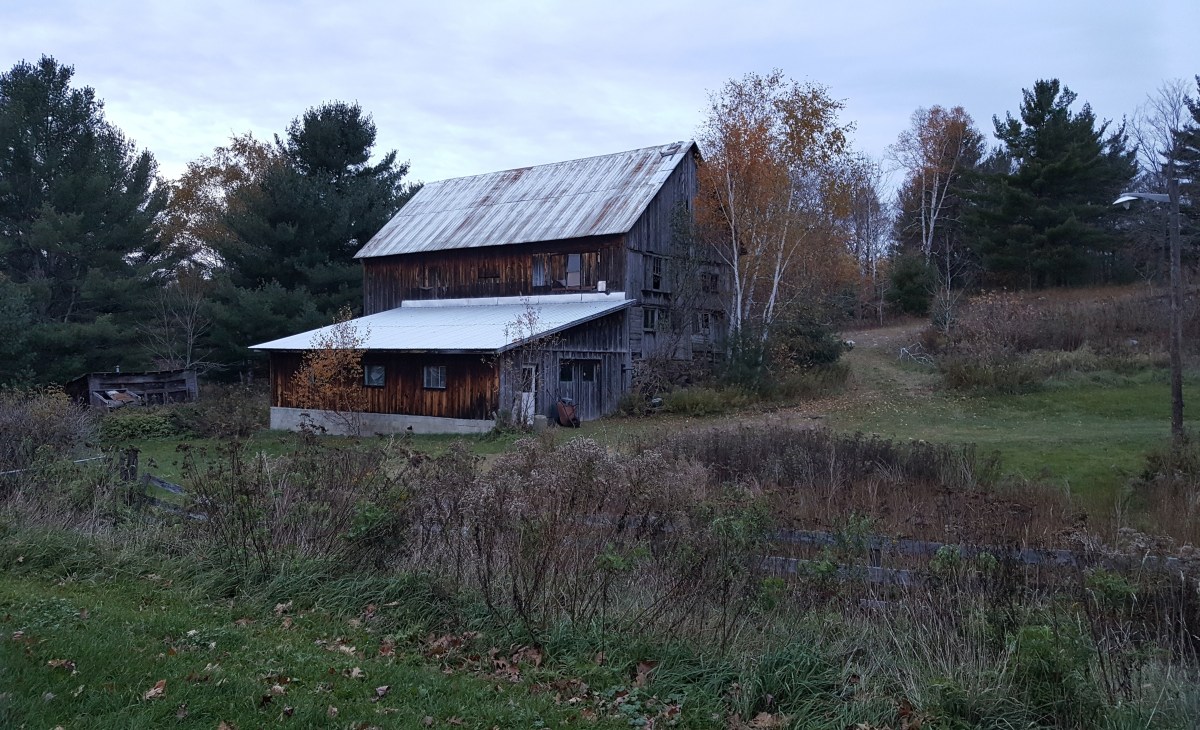
Less than 10 minutes from our current home, still technically inside our small town’s limits, almost 10 acres of rolling hills, bush and scrubby pastures…

What was there not to love?

When he showed me the listing later that evening after the children had been tucked into their beds,

I let him know that there was plenty not to love!

Scrolling through the pictures literally made me sick to my stomach.

The property was gorgeous, there was no doubt…

but the house was outdated and cluttered with the excess of a life well lived.

Curled up on my couch in our beautiful, spacious, clean and modern style home I wanted nothing to do with this dilapidated home boasting 70’s style wallpaper and floral linoleum.

I realized just how attached I had become to this beautiful home God had gifted to us just two years prior.

I felt so safe here.

So loved and protected.

It had been our safe haven through a rocky two years, and I was not ready for that to end.

When it was given to us I had felt like it was an affirmation from God that we were seen and that He would provide for all our needs.

This farm felt like a kick in the gut.

Sure, I had dreamed of this kind of opportunity…but as we all know dreams are very different than real life.

I felt like I had just finally caught my breath.

Thankfully, my husband’s vision is much clearer than my own and over the next few days and weeks he nudged and cajoled me towards the dream.

Through his eyes I started to see it…that this really might be the opportunity of a lifetime.

My heart recoiled from the idea of more change and discomfort, but also strained toward the adventure I knew could be ours.

I could stay in my safe little bubble, or I could say yes to adventure and endless opportunities to create and explore.

At only 28 years old, was I really going to hunker down and say this is it?

I agreed to go check it out and we made it a date night, leaving the kids with a babysitter.

The house still gave me the same sinking feeling…but it also erased the doubts I had about there being enough space for us all.

When we got outside and began walking the property, the shades on my limited vision dropped away.

In the magical evening hours, sun sinking low in the sky, the farm lay around us in gentle hills, tall birches and sprawling grasses.  I imagined my children running the lengths of the farmyard and chickens pecking at the dirt outside the small shed.

We ducked through the doors of the old barn and gazed around at broken down horse stalls in the dim light.  The air was thick and musty, carrying me back to my own childhood days on a farm in Wellington County.

We hiked up the barn hill and turned in circles in the empty hayloft, a barn swing soaring in my mind’s eye.

There were falling down little sheds all over the place, hidden piles of wood and tin and opportunity waiting for eager small hands.

By the time we left…I think I knew.

It kept me awake for hours each night for the next week.

I’d wake up in the stillness and lay wide eyed, anxiety laying heavy on my chest as I tried to imagine leaving our home.

This wasn’t the plan!

I imagine He smiled, reaching down to stroke my brow tenderly as He gently, slowly eased the fears away.

Trust me; my plans are always good.

I grasped for something solid in it all.

If you believe what you say you do, you do not need to believe the lie that without this safe, beautiful, comfortable home you will not be happy.

What if the greatest adventure of your lives is staring you in the face and you are too afraid to seize the day?

A few weeks later, after hours and hours of agonizing, dreaming, praying, youtubing and researching…it is officially ours!

To give wings to my faltering faith, our home sold in less than a week with multiple offers coming in.

While at a conference during the week of our home going up for sale, a speaker introduced this acrostic for the word FAITH.

Fantastic

Adventures

In

Trusting

Him.

I smiled as my husband squeezed my hand.

It is sort of cheesy, but it keeps playing around the corners of my mind as we sign papers, take our kids to see their new home and dream up future plans.

Fantastic adventures in trusting Him.

I think God loves to show us pieces of Himself.

I think He must delight in our confusion and amazement at each new revelation of just how omniscient and good He is.

I think He must patiently wait for us as we stand quaking in terror at the tip of each new ledge, awaiting the moment when we finally take the leap and realize He has caught us!

And there, in those moments, when we have been filled with fear, overwhelmed with grief, crushed by anger and sadness or paralyzed with confusion…when those big arms catch us and shore us up…it is then that we learn to trust Him.

It is then that we see just how big he is and how His largeness fills all the voids and covers the distance between our dreams and reality.

It is then that we embrace our not enough for His more than enough.

It is then that we can start to believe that these stories we live are not ours, but His.  One grand, sweeping tale where He plays the main role while our parts come into perspective as merely sidelines to the main plot.

I can’t wait to see what the next chapter holds.

~AF


Reading Aloud with Your Family

Every now and then in the sea of parenting books I am constantly reading, there is one that connects with my soul and makes me say, Yes!  That’s it!

Recently I stumbled across one of these books.

The Read Aloud Family by Sarah Mackenzie inspired me, challenged me and helped me dream again as a Mom.

As a young girl I fell head over heels in love with books.  I learned to read with ease at a very young age and spent hours poring over books.  Stories enchanted me, carrying me to new places and introducing new ideas.

I used to spend hours wandering the isles of the public library, pulling out one book after another to scan the back cover or flip through the pages to get an idea of the content.  When it was time to go I would painfully sort through my huge stack and try to decide which ones were my favourites and which ones I would leave behind until next time.

As a mother, I would love to see my children discover stories the way I did.  To be delighted for hours on end, swept away to other worlds and times in a story is a beautiful way to spend a childhood.

A reader is never bored.

Five years into my mothering journey, however, I have come to realize that some of my children are not wired to dive into literature the way I am.  Learning disabilities and high energy levels can throw some major barriers on the roadway to reading, and for some of my children reading will always feel more like a decoding exercise than a fascinating way to spend a couple hours.

Imagine trying to read a book upside down while looking in a mirror with itchy mosquito bites all over you begging to be scratched.  That is approximately what it feels like for one of my children in particular to sit down with a book.

What The Read Aloud Family introduced to me was the idea that even if my children are never able to launch into the world of literacy independently, they can still enjoy stories and let their imaginations take them to these far away places through me reading aloud to them!  Not only that, but the benefits of reading are not only limited to enjoyment…though that should still be our number one goal when we read aloud!

When you read aloud to your children, these 5 things will happen:

1. With the chore of decoding words out of the way, your children will be able to settle in and enjoy the story, setting them up to experience the joy and magic of stories.

Though it is certainly true that life requires a lot of mandatory reading that is not fun, I want my children to pick up books because they want to.  Reading aloud to your children and introducing audio books to them gives them the opportunity to experience what it is like when the chore of learning to read is put behind them and they can effortlessly experience the content of the writing.  Though it is still going to take work to learn how to read, we all know the more that you read the better reader you will become!  If we can motivate our children toward reading with pleasure instead of a feeling of obligation, they are much more likely to succeed in becoming strong readers.  Nothing will make them want to pick up books more than falling in love with stories.  You can help them do this by reading interesting books to them, including books that would be too difficult for them to read on their own.

2. When you read aloud you will be exposing your children to phonetically correct language which will help them develop their own ability to read, write and speak correctly. 

Constantly taking in new vocabulary and proper sentence structure through the ear will inevitably result in the same coming out through their own mouths and writing.  It is exciting and funny to watch your children try out new vocabulary and ways of speaking.  I love seeing little ones trying to include big words they have picked up while writing their personal stories.  It’s also fun to explore vocabulary with your children as you read, giving them definitions for those interesting words you stumble across.

3. When you read aloud with your children you can help them learn how to make connections in the content.

This is a skill that is so important for children to develop as it is linked to their comprehension of what they are reading.  It is not enough just to be able to decode words; they need to be able to comprehend the ideas being portrayed behind the words.  Understanding similes, metaphors, foreshadowing and motives behind the content they are reading is imperative.  When reading aloud, taking the time to ask simple questions or explore opinions can encourage your children to be thinking while they are taking in content and analyzing it’s motives and meaning.  In a culture where our children are being bombarded with messages, I want my children to know how to use critical thinking to develop their own convictions and ideas confidently.  You can encourage three kinds of connections: text to text (connecting to another book or earlier chapter), text to self (connecting to his or her own life) and text to world (connecting to something in the broader world or culture.)           

4. When you read aloud to your children you will be building memories together. 

This is my favourite motivation to read aloud.  There are few things I would rather give to my children than to remember me being truly present with them, hearing my voice reading to them and experiencing the intimacy of a shared story.  I can still hear my mother’s voice, see myself and my four siblings sprawled around the living room and remember affectionately the tears in her eyes the first time she read Wilson Rawls’ Where the Red Fern Grows.  That moment in time will be lodged in my soul forever.  I can see my fourth grade teacher’s classic high heels and feel the hard, scratchy carpet beneath me when I pick up the book Bridge to Terabithia by Katherine Patterson  and The Lion, The Witch and the Wardrobe by C. S. Lewis.  My husband inherited the well beloved Thornton T. Burgess collection of bedtime stories from his grandparents and we are currently reading through his well loved copy of The Adventures of Chatterer the Squirrel.  My daughters were delighted to learn this was one of their Dad’s favourite childhood stories.  Gordon Korman’s humorous stories bring back memories to me of laughter and camaraderie with my siblings and cousins as we would retell the stories and pass on the latest sequels.  Stories that are shared provide material for conversations and opportunities to explore difficult topics.  Love, honor, courage, grief…these are topics often explored, even in very young children’s literature.

5. Last of all, when you read to your children you will also be reading to yourself! 

I have been reminded this summer that there are few things I enjoy more than a good story.  I love when the kids are begging for just one more chapter at bedtime and I cave, despite the time, because I just can’t wait to see what happens next!  I love reading, and with five children in the house, there aren’t a lot of quiet moments where I can pick up my own books so if I can experience reading and spend time with my children simultaneously…that’s a win for me!  I also love having an excuse to pick up those elementary age books again.  Many of the best books I have ever read are written for ages 8-12 year olds.  Charlie and the Chocolate Factory by Roald Dahl, The Trumpet of the Swan by E.B. White, Little House in the Big Woods by Laura Ingalls Wilder, Anne of Green Gables by Lucy Maude Montgomery and Ramona Quimby Age 8 by Beverly Cleary; what a humorous, enchanting and enjoyable repertoire!  And those few books are just barely scratching the surface of a gold mine filled with hours of adventure and entertainment.  Even picture books for little kids can be interesting and fun to read as an adult.  I have loved my boys’ recent favourites; The Little Blue Truck by Alice Schertle and Jill McElmurry, Goodnight, Goodnight Construction Site by Sherri Duskey Rinker, Big Bad Bruce by Bill Peet and Mighty Dads by Joan Holub and James Dean.

If any of this sounds exciting or intriguing to you I encourage you to pick up a copy of Sarah Mackenzie’s book, The Read Aloud Family.  This manual to reading aloud with your family will give you inspiration, practical tips, book lists for every age group and tips for choosing good books.  I promise you will not regret it!

~AF